
You may already be putting a great deal of care into what you eat.
You read labels. You try to make sensible choices. You leave a medical appointment knowing you need to work on your blood sugar, but still wondering what that should look like at breakfast tomorrow.
And when your numbers aren’t reflecting your effort, another instruction to “eat healthier” can feel painfully incomplete.
You deserve something you can use.
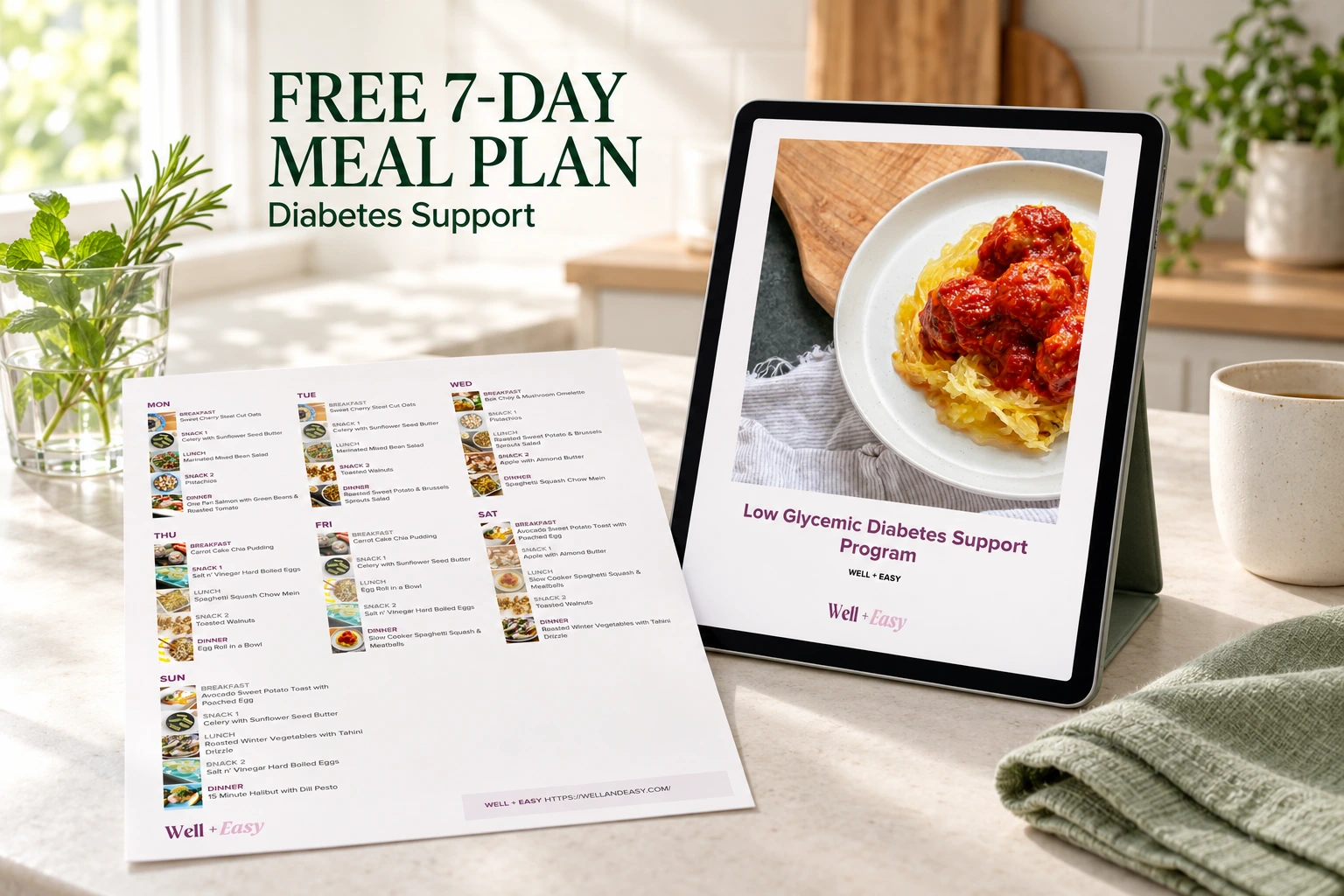
This free 7-day low-glycemic diabetes-support meal plan gives you a week of meals, recipes, a grocery list, and nutrition information in one place. It offers a practical starting point for turning food advice into something you can put on your plate.
The purpose is to make the next few decisions easier—and help you understand the choices behind them.
Open your free 7-day diabetes-support meal plan →
What does eating for diabetes actually mean?
When you’re managing type 2 diabetes, food advice can quickly become a collection of things to avoid.
Less sugar. Fewer carbohydrates. Smaller portions.
But you still need meals that satisfy you, nourishment that supports your strength, and an approach you can use while cooking for your household, seeing friends, or getting through a busy week.
Carbohydrates have the greatest direct effect on blood glucose, but that doesn’t mean they all need to disappear. The American Diabetes Association’s meal-planning guidance includes non-starchy vegetables, protein, and quality carbohydrate foods together. The balance and portions matter. diabetes.org
That is a more useful question to bring into your kitchen:
How can I put this meal together in a way that supports my blood sugar and still feels like something I want to eat?
Where low-glycemic eating fits
The glycemic index, or GI, describes how a carbohydrate-containing food raises blood glucose under standardized testing conditions. Lower-GI choices can be useful in diabetes management, but a GI number doesn’t tell you everything about a meal.
The amount of carbohydrate you eat matters, too. Glycemic load brings portion size into the picture by considering both a food’s GI and the carbohydrate in the amount eaten. Preparation, processing, and the other foods on your plate can also influence your response. Diabetes UK
Think about the difference between choosing a food from a list and deciding how to serve it.
With oats, for example, you can consider the type of oats, your portion, the toppings, and what supplies protein alongside them. With beans, you can recognize that they contribute both carbohydrate and plant protein, along with fiber.
You’re learning to make a meal work as a whole.
What you’ll find in the free plan
The PDF includes a seven-day menu with breakfasts, lunches, dinners, and snack options, followed by a grocery list and individual recipes.
You’ll find meals such as:
- Sweet Cherry Steel Cut Oats
- Bok Choy & Mushroom Omelette
- Marinated Mixed Bean Salad
- One Pan Salmon with Green Beans & Roasted Tomato
- Egg Roll in a Bowl
- Slow Cooker Spaghetti Squash & Meatballs
- 15 Minute Halibut with Dill Pesto
There are vegetables, fruit, beans, oats, eggs, fish, nuts, and seeds throughout the week. Several meals repeat, giving you opportunities to cook once and use what you’ve already prepared.
You don’t need to master a new recipe every time you’re hungry.
Read the recipes and download the 7-day plan here →
Look for what your meal gives you
When you’ve spent years trying to manage your weight or blood sugar, it’s understandable to focus on what you should take away.
It can be helpful to ask what needs to be there.
Protein deserves a place. Eggs, fish, poultry, beans, and other protein foods help you meet your nutritional needs. Adequate protein also supports muscle maintenance—part of caring for the strength you bring to the activities you enjoy.
Breakfast is one place to look more closely. The plan’s Sweet Cherry Steel Cut Oats provides about 11 grams of protein per listed serving. If that breakfast needs more protein for your individual goals, a serving of plain Greek yogurt or another suitable protein-rich food could help round it out. Additions change the nutrition information shown in the PDF.
Fiber-rich foods matter, too. Beans, vegetables, fruit, oats, nuts, and seeds bring variety and fiber into your day. If you’re used to eating much less fiber, introduce these foods gradually rather than trying to change everything overnight.
And carbohydrate portions still count. Pairing carbohydrate with protein, fat, and fiber can affect digestion, but it doesn’t make the carbohydrate disappear. Use the recipe’s serving information alongside the carbohydrate guidance you’ve received from your diabetes care team. professional.diabetes.org
The goal is to understand enough to make a helpful adjustment without turning every meal into a calculation.
Make the week fit your actual life
Before you shop, take a few minutes to look through the plan.
Which meals sound appealing? Which ingredients do you already have? Where would leftovers save you time?
You can begin with the full week, or choose one breakfast and two main meals to try first.
If your energy is limited, prepare ingredients in stages. Chop vegetables when you have a few minutes. Make a recipe that will cover more than one meal. Keep the grocery list nearby so you can cross off what’s already in your kitchen.
If your appetite is small, pay attention to nourishment as well as volume. Simply shrinking every part of a meal can leave you short on protein or overall food. You may need smaller, more nourishing meals arranged around your needs.
The nutrition totals in this plan are information about the menu—not a personal prescription. Your calorie, protein, carbohydrate, and snack needs may differ. Meal and snack timing should also work with your medicines, activity, and care plan. NIDDK
If you use insulin or medicines such as sulfonylureas, speak with your diabetes care team before substantially changing carbohydrate intake or skipping meals or snacks. These changes can increase the risk of low blood sugar. Kidney disease or other dietary restrictions also call for individual guidance. Keep taking medicines as prescribed. NIDDK
What can you learn in seven days?
A week can help you discover a breakfast you enjoy, a lunch worth repeating, or a preparation habit that makes dinner easier.
You might notice when you’re hungry, which meals leave you satisfied, and where your day needs more support.
If glucose monitoring is part of your care, follow your clinician’s instructions and look for patterns you can discuss together. One reading doesn’t tell the whole story.
Neither does one week. A1C reflects average blood glucose over roughly three months, so this plan isn’t a seven-day test of whether you can “fix” your diabetes. NIDDK
It is an opportunity to practice a few decisions you can keep using.
That matters because your health goals reach beyond a lab report. You want energy for your plans, confidence around food, and more room in your day for the people and activities you love.
When you’re ready for more support
The free plan gives you a week of meals to begin with.
The Well + Easy Meal Planner + Whole GI Protocol helps you keep going—and understand how to make choices beyond a printed menu.
Whole GI brings low-glycemic principles and glycemic load into a daily framework, considering portions, combinations, preparation, and timing. It also makes room for the wider picture, including sleep, stress, and other factors that can affect your health.
The aim is to help you feel capable choosing meals in your own kitchen, adjusting familiar foods, and finding a routine that works with your circumstances.
Recipes and meal plans are there when they’re useful. Understanding the framework gives you something you can carry into the rest of your life.
Explore the Well + Easy Meal Planner + Whole GI Protocol →
For now, start with something manageable.
Open the free 7-day diabetes-support meal plan, choose a meal that sounds good, and decide when you’d like to make it.
You’ve already been making an effort. Let’s give that effort a useful next step.