
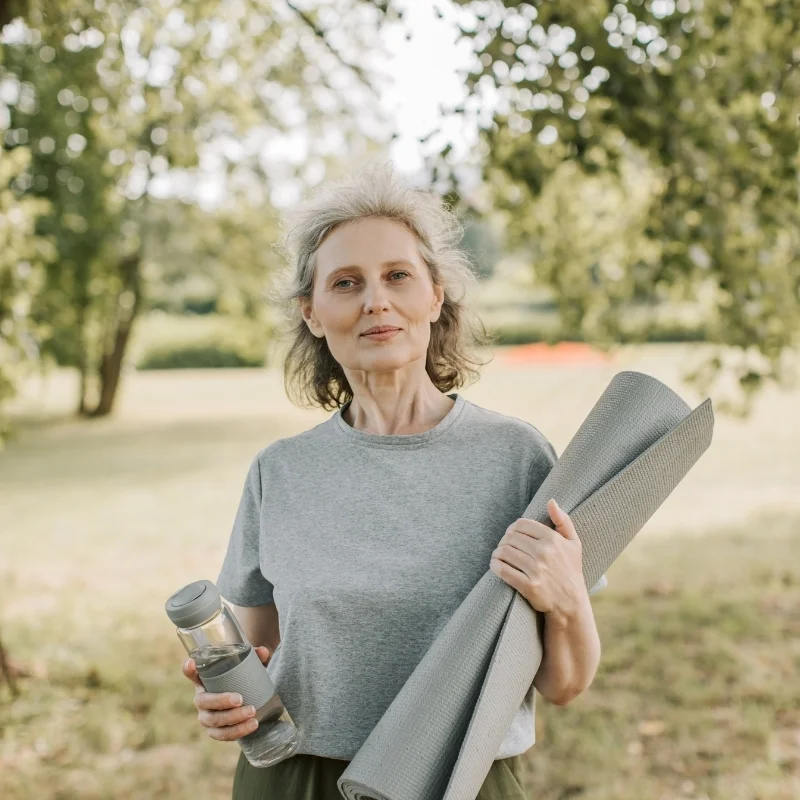
I’ve been thinking a lot about movement lately. Not the punishing, high-intensity kind that leaves you sore for days. And not the kind that you absolutely do not want to do even though everyone is saying “you should try it!”. The kind of movement that makes your body feel good, that you don’t hate and can actually enjoy, that you can sustain for years, that doesn’t wreck your knees or your back in the process.
Movement is medicine. It stabilizes blood sugar. It reduces inflammation. It helps manage weight, improves mood, and literally extends your life. But the way we’ve been taught to exercise - all that jumping, pounding, high-impact cardio - isn’t sustainable for most. Especially if you’re dealing with joint issues, recovering from injury, managing chronic conditions, or just trying to move in a way that doesn’t leave you in pain the next day.
Low impact doesn’t mean low intensity. It doesn’t mean easy or ineffective. It just means you’re protecting your joints while still getting all the benefits of exercise. Your feet aren’t constantly pounding the pavement. You’re not jarring your spine with every movement. It’s flexible, and I think, quite freeing.
I’ve put together twelve low impact exercises that work well with a low GI lifestyle. Each one comes with a description, the benefits you’ll get, and a something you can “try on” to find if you like it. Mix and match these based on what you have access to, what your body needs on any given day, and what actually sounds good to you.
Because the best exercise? It’s the one you’ll actually do.
1. Walking
Let’s start here as it’s often the most accessible form of movement there is.
Walking is simple. It’s effective. It doesn’t require any equipment or gym membership. You need your body and somewhere to go. Like walking your block or at the park or even inside of malls. Walking is one of the most powerful tools we have for improving cardiovascular health, managing weight, and reducing the risk of chronic diseases like diabetes and heart disease.
I’m not talking about a casual stroll (though that counts too). I’m talking about purposeful walking - moving with intention, paying attention to your pace, breathing, and how your body feels.
Try it: If walking is something you’re physically able to do, I encourage you to try incorporating intervals. Walk at a brisk pace for 30 seconds (fast enough that you’d have trouble holding a full conversation), then return to your normal pace for 1 minute. Repeat this pattern for 20-30 minutes. The intervals bump up your heart rate, increase calorie burn, and improve cardiovascular fitness without the joint impact of running.
Why it matters for blood sugar: As part of the Whole GI Protocol I teach clients, walking after meals is one of the most effective ways to manage blood sugar spikes. Even a 10-15 minute walk after eating can significantly lower your glucose response.
2. Swimming
If you have access to a pool and able to do so, swimming is about as close to a perfect exercise as you can get.
The water supports your body weight, which means minimal stress on joints, bones, and muscles. But I will say it’s not always the “easy” route either - the water provides natural resistance in every direction, giving you a full-body workout that builds both cardiovascular fitness and muscle strength.
Swimming improves flexibility as you reach, stretch, and move through the water. It works muscles you didn’t even know you had. And there’s something meditative about it - the rhythmic breathing, the repetitive strokes, the way sound changes underwater. I love the water, so this is one of my most common exercises.
Try it: Instead of swimming straight laps of freestyle, mix up your strokes. Swim 2 minutes of freestyle, rest for 30 seconds, then 2 minutes of breaststroke, rest, then 2 minutes of backstroke. Each stroke works your body differently, engaging different muscle groups and keeping your workout interesting. Take your time. Pay attention to your breath.
Accessibility note: Many community centers and YMCAs offer affordable pool access and even water aerobics classes designed for different fitness levels.
3. Cycling
Whether you’re on a stationary bike at home or riding through your neighborhood, cycling is an excellent low-impact cardio option.
Your bike supports your body weight, so it’s not nearly as tough on your joints like there is with running. But your legs are working hard - building strength in your quads, hamstrings, glutes, and calves. Your heart rate climbs. Calories burn. And if you’re outside, you get fresh air and scenery as a bonus. It’s also nice to bike with someone if you can.
Try it: Add resistance or hills. If you’re on a stationary bike, increase the resistance for 2-3 minute intervals. If you’re riding outside, choose a route with some inclines. Nothing too steep, but give yourself a chance to get a little out of breath. The added challenge builds more muscle and increases the cardiovascular benefit without increasing impact.
For blood sugar management: Cycling is particularly good for insulin sensitivity! The large muscle groups being worked in your legs use a lot of glucose, which helps lower blood sugar both during and after your ride.
4. Yoga
Ok, yoga often gets dismissed as “just stretching,”. Sure, you do stretch, but it’s more than that.
Yoga improves flexibility and also builds real strength (try holding plank or warrior poses for a minute and tell me yoga is easy 😅). It improves balance and body awareness. It teaches you to connect breath with movement, which has profound effects on your nervous system and stress levels.
There are so many styles of yoga - from gentle restorative classes to more challenging vinyasa flows. You can modify almost every pose to match your current ability level. No flexibility required to start. No special body type needed. Good news is that there are plenty of videos on Youtube.
Try it: Find a video on Youtube. Hold each pose longer. Instead of moving quickly through a flow, stay in each position for 30-60 seconds. The longer holds build more strength and require more focus. Or try more advanced variations - Chaturanga instead of modified push-up, warrior three instead of warrior one. All videos will show you what these moves are and how to safely do them.
The mental health piece: Yoga’s stress-reduction benefits are why I love it so much. Chronic stress raises cortisol, which raises blood sugar and promotes fat storage (especially around the middle). Yoga directly counters this.
5. Pilates
Pilates focuses on core strength, but it works your entire body through controlled, precise movements.
Everything in Pilates is about quality over quantity. You’re not doing endless reps of anything. You’re moving slowly, with control, engaging specific muscles deliberately. This builds deep strength, improves posture (so important as we get older), and increases flexibility - all with minimal stress on your joints.
Try it: You do need to find a studio or gym that offers this. There are also Pilates home set ups that you can buy. If you go this route, I recommend: Increase repetitions or add light weights. Start with 8-10 reps of each exercise, then work up to 15-20 as you get stronger. Or hold light dumbbells (1-3 pounds) during arm exercises to add resistance.
Why it matters: Strong core muscles support your spine, improve balance, and make every other type of movement easier and safer. Pilates is one of the best ways to build that foundational strength. If it’s something you already have access to, like with a gym membership, you should definitely try it.
6. Tai Chi
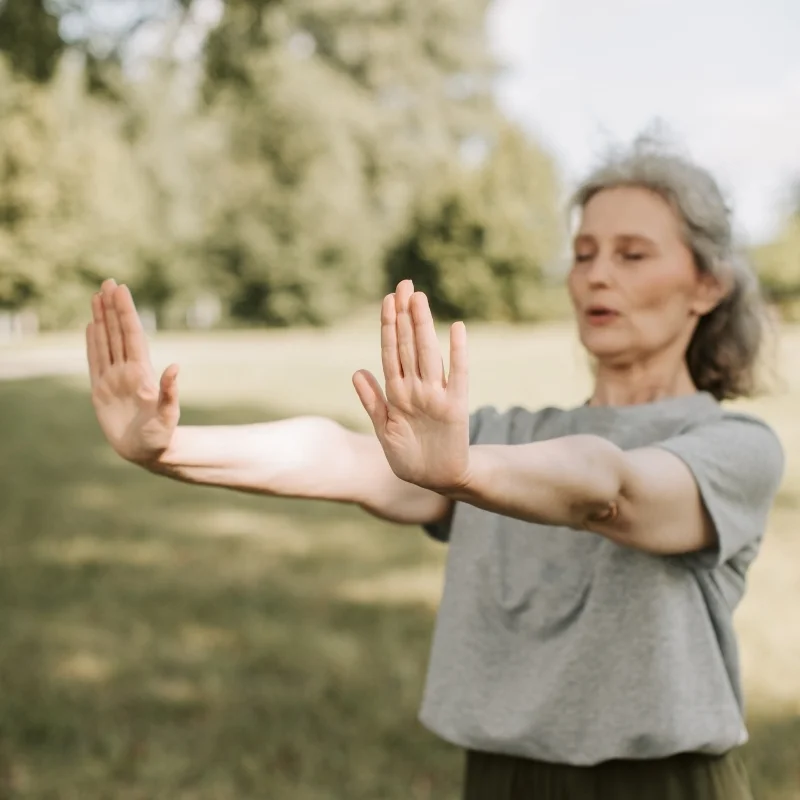
Tai Chi is a gentle martial art that looks like slow-motion dance.
The flowing movements improve balance and coordination. And if falling happens to be a risk for you, Tai Chi has been shown in studies to significantly reduce fall risk.
It’s also just deeply relaxing. You may have seen people practicing it in the park and wondering what they’re up to. The slow, meditative movements calm your nervous system, reduce stress, and improve overall well-being. Think of it as moving meditation.
Try it: You can find a Tai Chi video on Youtube to get started. If you’re able to try this practice, I recommend: Slow down even more than instructed. The slower and more controlled your movements, the more balance and focus required. Try to move so slowly that you can barely see yourself moving - it’s harder than it sounds.
Getting started: Look for Tai Chi classes at community centers, gyms, parks, or online. Many are free or very low cost. You can really find excellent videos online to practice at home.
7. Water aerobics
If you like the idea of swimming but want more structure, water aerobics might be more along your lines.
As I mentioned earlier, water reduces impact on joints while providing natural resistance in every direction. You can move vigorously, get your heart rate up, build muscle strength - all without the joint stress you’d experience doing the same movements on land.
Water aerobics classes often include a variety of movements - jogging, jumping jacks, leg lifts, arm exercises with pool noodles or water weights. It’s a full body workout that somehow doesn’t feel as hard as it actually is (thanks to the water support).
Try it: If you’re trying this on your own, I recommend: Add equipment. Use water weights (foam dumbbells made for pool use) or resistance tools like pool noodles to increase the work your muscles do. Try jogging or doing high-knee lifts in the deeper end where you have less foot contact with the bottom.
Social bonus: I’ve found that water aerobics classes tend to be friendly, social environments. I’ve never taken one but that’s what it looks like at my gym. I believe the community aspect can be just as valuable as the exercise itself.
8. Elliptical training
The elliptical machine mimics running or walking but without the impact.
Your feet never leave the pedals, so there’s no pounding on your knees, hips, or spine. But you still get a solid cardiovascular workout. Most ellipticals also have moving handles, so you’re working both upper and lower body simultaneously.
Try it: If you’re trying this one on your own, increase resistance or incline for intervals. Bump up the resistance level for 2-3 minutes at a time, then return to your baseline. Or increase the incline to simulate hill climbing. Some people also add backward strides (pedaling in reverse) which targets different muscle groups, particularly your hamstrings and glutes.
At-home option: If you don’t have gym access, a basic elliptical for home use is much more affordable than a treadmill and takes up less space. If this option is accessible to you AND you think you’ll find it enjoyable, give it a try.
9. Resistance band exercises
Resistance bands are one of the most underrated pieces of exercise equipment. Says my trainer!
I personally like that they’re inexpensive (a set costs $10-30) and they take up almost no space. I travel with mine. They’re also just incredibly versatile - you can work every major muscle group with just a few bands.
The bands provide resistance throughout the entire movement, which builds strength without the joint stress of heavy weights. You can easily adjust the difficulty by using bands with different resistance levels or by changing your grip.
Common resistance band exercises include squats (step on the band, hold the ends at shoulder height), rows (anchor the band and pull toward your body), chest presses, bicep curls, lateral raises for shoulders, and leg lifts.
Try it: Use a higher resistance band, double up bands for more tension, or increase your sets and reps. You can also slow down your movements - taking 3-4 seconds to complete each rep instead of rushing through them.
Form matters: Because resistance bands don’t have the built-in limits of weight machines, pay attention to form. Move slowly and with control. The band should provide tension throughout the entire movement. There are many videos on Youtube you can find to get started.
Bands I recommend: I do highly recommend fabric resistance bands like these vs. the rubber ones. The fabric helps so the bands don’t slip or rollup while you’re using them. Although the rolling doesn’t change the workout, I find it uncomfortable. I have these, but I found them on clearance at TJ Maxx for $8! Check your local discount stores next time you’re there to find what they have.
10. Chair exercises
Chair exercises are ideal if you have limited mobility, balance issues, or you’re just starting to rebuild strength after illness or injury.
Don’t underestimate seated exercises. You can get a real workout from a chair - seated marches (lifting knees toward chest), leg extensions, arm raises with or without light weights, seated twists for core work, and ankle circles for mobility.
These exercises improve circulation, maintain muscle strength, and keep joints mobile - all without requiring you to stand or balance.
Try it: Add ankle weights for leg exercises (start with 1-2 pounds). Use light dumbbells (2-5 pounds) for arm exercises. Increase your pace for the cardio-style movements like marches. Add more repetitions as you get stronger.
Perfect for: Anyone recovering from surgery, dealing with severe arthritis, balance disorders, or just starting to exercise after a long period of inactivity.
11. Bodyweight exercises
You don’t need equipment to build strength. Your own body weight provides plenty of resistance.
Modified bodyweight exercises are low-impact but still effective: wall push-ups instead of floor push-ups, seated or box squats (squatting to sit in a chair, then standing back up), glute bridges (lying on your back, lifting your hips), modified planks on your knees, standing leg lifts.
These movements build functional strength - the kind of strength you use in daily life. They improve muscle tone, boost metabolism, and can be done anywhere, anytime.
Try it: Add pauses. When you’re at the bottom of a squat or push-up, hold that position for 2-3 seconds before pushing back up. The pause eliminates momentum and makes your muscles work harder. Or increase your reps and sets as you get stronger.
Progression: Start with 5-8 reps of each exercise, rest, then repeat for 2-3 sets. As this gets easier, increase to 10-15 reps, then add more sets or try slightly harder variations. If this is something you can do, you’ll find plenty of videos online.
12. Balance exercises
Lastly is balance training. This is one of the most important types of exercise, especially as we age.
Simple balance exercises include standing on one leg (hold onto a counter at first if needed), heel-to-toe walking (like you’re walking a tightrope), standing from seated without using your hands, and weight shifts (slowly shifting your weight from one foot to the other).
These exercises improve proprioception (this is your body’s awareness of where it is in space), enhance coordination, and significantly reduce fall risk. Balance training is preventive medicine.
Try it: Make it harder by closing your eyes while standing on one leg (removes visual input, forcing your body to rely on other balance systems). Or try performing balance exercises on an unstable surface like a foam pad or folded towel. If you’re going to try either of these, I recommend having a spotter or someone else present until you get the hang of it.
Daily practice: Balance exercises don’t need to be a formal workout. Practice standing on one leg while brushing your teeth, waiting for coffee to brew, or during commercial breaks. Balancing is one of those things you can do almost anywhere.
Making low impact exercise part of your life
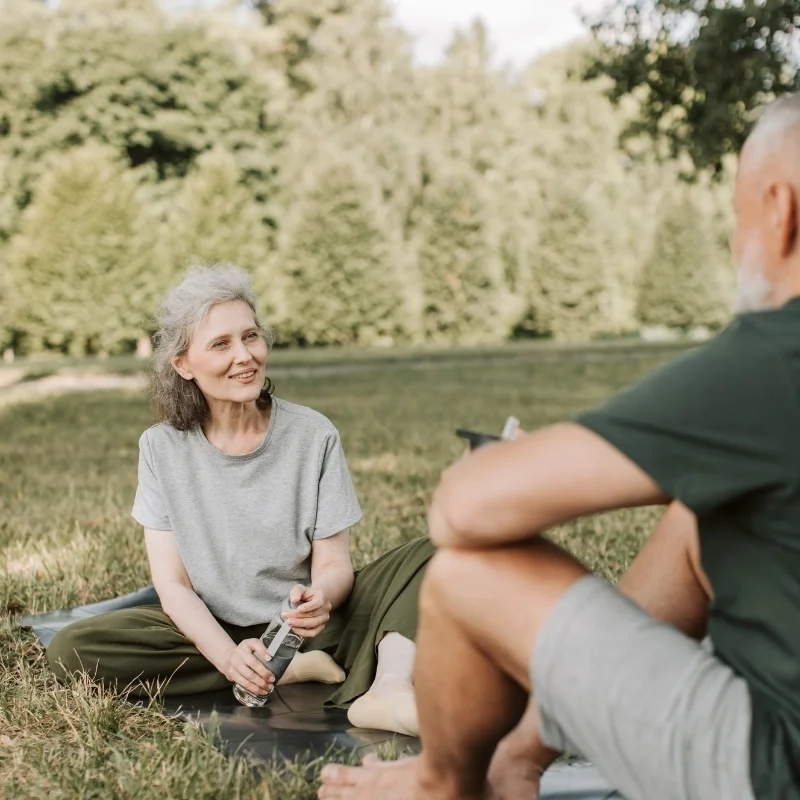
You don’t have to do all twelve of these exercises. You don’t even need to do them all in one week.
Pick 2-3 that appeal to you. That you have access to. That sound enjoyable rather than like punishment. Start there.
Movement should enhance your life, not consume it. It should make you feel better, not worse. It should be something you look forward to, not dread. Read that again.
A few principles I follow:
Listen to your body. If something hurts (not the “my muscles are working” burn, but actual pain), stop. Modify. Try something else. Pain is information, not something to push through.
Consistency beats intensity. Moving moderately 5-6 days a week will serve you better than one brutal workout followed by a week of recovery or just not wanting to workout anymore lol. Low impact exercises let you move more frequently because you’re not constantly recovering from joint stress.
Mix it up. Different exercises work your body in different ways. Walking and swimming. Yoga and resistance bands. Variety keeps you from getting bored and prevents overuse injuries.
Start where you are. If you haven’t exercised in months or years, start small. A 10-minute walk. Five chair exercises. Two yoga poses. You’ll build from there. The hardest part is starting.
I read an interview once about a runner sharing their struggles about commitment to running everyday. This was an athlete who ran daily from 5am-12pm. When the interviewer asked, “what’s the hardest part about running?”, the athlete replied, “putting on the shoes”.
Movement helps blood sugar. Almost all movement improves insulin sensitivity and helps manage glucose levels. You don’t need intense exercise to get this benefit - consistent, moderate movement works beautifully.
Let’s move well, move often, and move in ways that let us keep moving for years to come.
With love,
Jen
P.S. If you’re just getting started with exercise or have specific health conditions, check with your doctor first. This is especially important if you have diabetes and take medication, have heart conditions, or are recovering from injury. Movement is medicine, but like any medicine, it needs to be appropriate for your specific situation and I am not privy to your health history.