
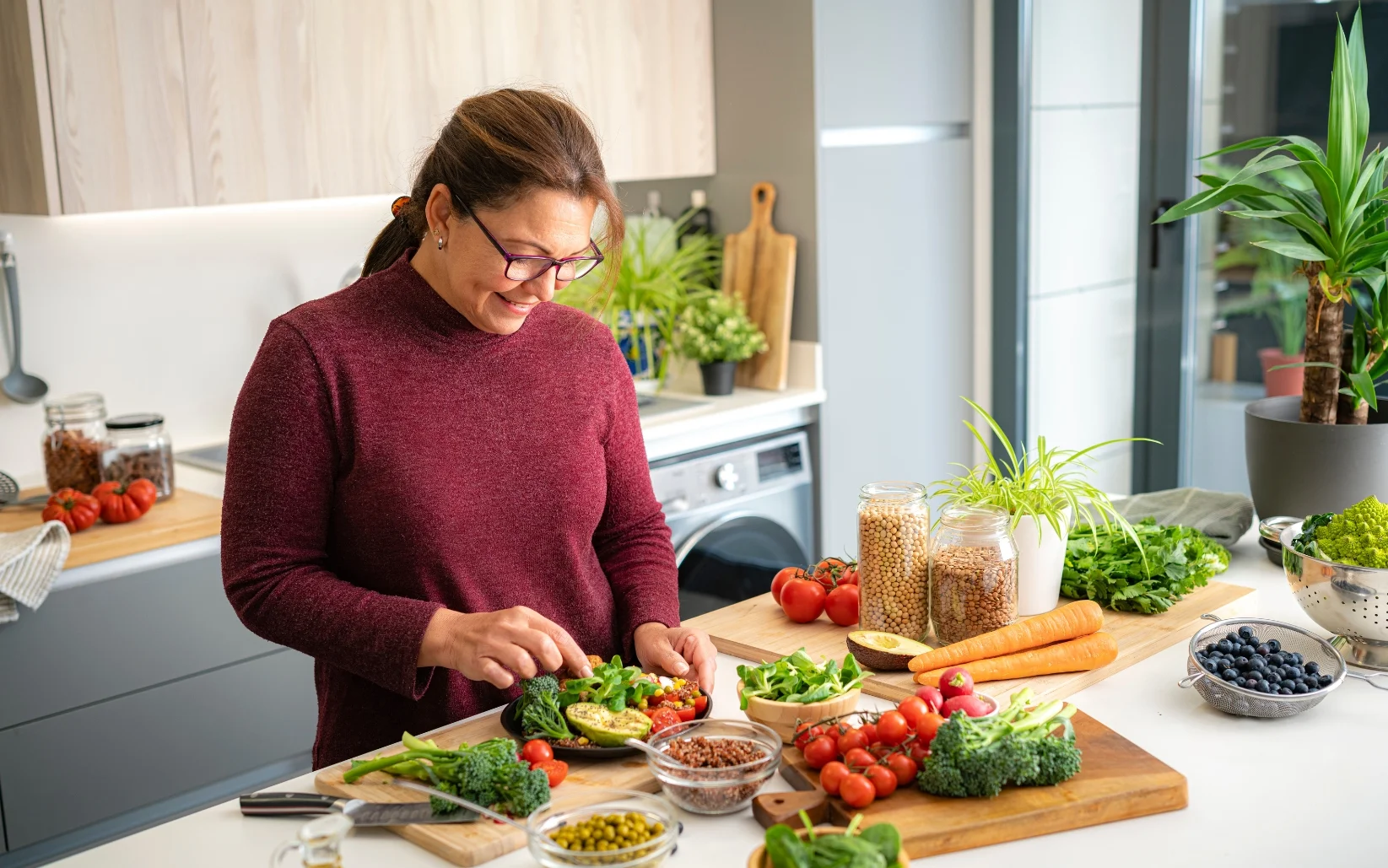
You could probably recite the basics in your sleep by now. Sweet potato beats white rice. Pair the carb with protein. Instant oatmeal with a spoonful of brown sugar isn’t really the same food as steel-cut oats with cinnamon. If I quizzed you on what’s low-glycemic and what isn’t, you’d pass.
So why does Tuesday at 5 pm still feel like a guessing game?
The gap isn’t what you think it is
I hear some version of this from women almost every week.
You’re not short on information. You’re short on a way to live it.
Almost every time, it comes out the same way: give me simple rules for how to actually apply this to a real day. Not another glycemic index chart. Not another explainer on why blood sugar spikes matter. A way to get dinner on the table Tuesday without doing math at the stove.
I’d bet at least one of these is you:
It’s 5 pm, the fridge is open, there’s no plan — so it’s the same chicken and salad again, and by Thursday you’re sick of your own cooking.
Sunday meal-prep sat on your calendar all week, undone, because just thinking about planning felt like its own chore — so Tuesday’s lunch ends up being whatever’s fastest, not what actually fits.
Two pans on the stove every night — pasta for him, cauliflower rice for you — until Wednesday, when you’re quietly eating the pasta too, because cooking two separate dinners every night was never going to hold.
You made breakfast for the family and never sat down to eat your own, so by 2 pm you’re standing at the counter, ravenous, eating whatever’s closest.
None of that is a knowledge problem. You already know what low-GI eating is. What you don’t have is a version of it built for your actual week — your kitchen, your family, your Tuesday at 5 pm.
Why I don’t think this is you making it harder than it needs to be
Almost everything in the wellness space is built to answer a question you already answered years ago. More charts. More “eat this, not that” lists. More content explaining why low-GI works, as if the reason it hasn’t stuck is that you’re not yet convinced.
More information alone does not remove the daily work of deciding what to eat. A repeatable meal rhythm and a short list of familiar meals can help.
When it closes, the change isn’t dramatic. It’s quiet. Dinner stops being a 5 pm decision and starts being something you already know the answer to. You’re not standing over two pans anymore. You sit down and eat your own breakfast. The mental math disappears, and what’s left is just... eating. That’s the shift I hear about most — not more willpower, just one less thing to negotiate at every meal.
So today I want to walk you through why more low-GI information was never going to fix this for you — and what actually does. Let’s get into it.
1. Your real bottleneck is decision fatigue, not a knowledge gap
Building a low-GI meal “from scratch” in your head, three times a day, means running the same handful of decisions over and over: is this carb paired right, did I get protein in first, is this actually low-GI or somewhere in the murky middle, will this hold me until the next meal. Do that at every single meal, seven days a week, and even someone who knows the material cold runs out of steam by Wednesday.
And honestly, I’ll say the quiet part: telling you to “just apply what you already know” is often the least useful advice you could get, because it treats too many decisions like a knowledge gap instead of what it actually is. No amount of extra explaining fixes a full plate of decisions you’re re-making from zero, every night, with nothing written down.
A repeatable meal rhythm can simplify decisions: a protein-forward breakfast, a balanced lunch with a portion of a fiber-rich carbohydrate, and a dinner built around protein and vegetables.
Choose a few meals you enjoy, write them down, and use those as your starting point for the week.
3. The one-pot rule for cooking two ways in one kitchen
If you’re cooking for a household that isn’t all doing this with you, here’s the rule I give my clients that actually holds up over a full week: build one base meal — same protein, same vegetables, same seasoning, for everyone at the table — and split it only at the very end. Your portion stays as is. Everyone else adds their starchy side, rice or pasta or bread, onto their own plate at serving time.
One pot. One process. Nobody’s eating a separate dinner, and you’re not standing over two pans wondering if tonight’s the night you give up and eat the pasta too. It’s a small rule, but it’s the difference between “I’m on a special diet” and “we’re eating dinner together, and mine’s built a little differently.”
One thing I’ll always ask of you: if you’re managing a diagnosed condition or working with medication, keep your doctor in the loop on any changes to how you’re eating. I’m here for the day-to-day — they’re the ones who know your full picture.
Your practitioner at Low GI Living,
Jen